


Cutting Tools for Composite Materials: What Aerospace and Automotive Engineers Must Know
 Sep 09, 2025|
 View:1059
Engineers working with composite materials face unique machining challenges that demand specialized cutting tools and advanced techniques. Modern aerospace and automotive applications increasingly rely on carbon fiber reinforced plastics (CFRP), glass fiber reinforced polymers (GFRP), and hybrid composites that require precision machining solutions to maintain structural integrity while achieving tight tolerances.
Key Takeaways
- Composite materials require specialized cutting tools with ultra-sharp edges and advanced coatings to prevent delamination and achieve quality surface finishes
- Diamond coated cutting tools and amorphous diamond coated end mills offer superior performance for abrasive composite materials, extending tool life up to 10 times compared to standard carbide tools
- Proper machining parameters including high spindle speeds (6,000-10,000 RPM) and controlled feed rates are essential for successful composite milling operations
- Heat management through appropriate cooling strategies prevents matrix degradation and maintains cutting tool integrity during extended machining cycles
- Tool selection must consider material type, production volume, and quality requirements to optimize both performance and cost-effectiveness
Understanding Composite Material Properties
Composite materials present distinct challenges compared to traditional metals. The heterogeneous nature of reinforced polymers creates varying hardness zones, where fiber reinforcement alternates with softer matrix materials. This variation causes rapid tool wear, delamination, and poor surface finish when conventional cutting tools are used.
Carbon fiber composites exhibit extremely high strength-to-weight ratios but are highly abrasive to cutting tools. The carbon fibers can reach temperatures exceeding 3000°C during machining, while the polymer matrix degrades at much lower temperatures. Engineers must carefully select cutting tools for composite materials that can handle these thermal and mechanical stresses effectively.
Glass fiber composites offer better machinability than carbon fiber but still present challenges. The glass fibers are less abrasive but can cause chipping and fraying if improper cutting techniques are employed. Understanding these material characteristics is crucial for selecting appropriate tooling strategies.
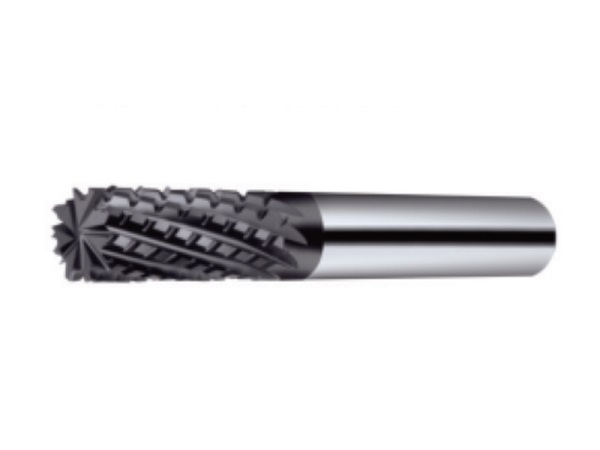
Essential Cutting Tool Requirements
Successful composite machining requires cutting tools designed specifically for these materials. The most critical requirements include:
Sharp Cutting Edges: Unlike metal cutting where some edge radius is beneficial, composite materials require extremely sharp edges to cleanly shear fibers rather than pushing or pulling them. Dull tools cause delamination, fiber pull-out, and fuzzy surfaces.
Proper Geometry: Cutting tools for composite materials need positive rake angles to minimize cutting forces and reduce heat generation. Sharp point angles help prevent edge chipping, while appropriate relief angles prevent rubbing against the workpiece.
Heat Resistance: The combination of abrasive fibers and heat-sensitive matrix materials demands cutting tools that can withstand high temperatures without losing their edge sharpness or coating integrity.
Vibration Control: Composite structures can be thin-walled and prone to vibration during machining. Cutting tools must provide stable cutting action to prevent chatter and maintain surface quality.
Advanced Coating Technologies
Modern coating technologies have revolutionized composite machining capabilities. Diamond coated cutting tools represent the gold standard for composite applications, offering exceptional hardness and thermal conductivity. These coatings provide superior wear resistance against abrasive carbon and glass fibers while maintaining sharp cutting edges throughout extended machining cycles.
Amorphous diamond coated end mills deliver particularly impressive performance in composite applications. The amorphous structure provides a smoother surface than crystalline diamond, reducing friction and heat buildup. This coating technology excels in high-speed machining applications where traditional carbide tools would fail rapidly.
Polycrystalline diamond (PCD) tools offer another high-performance option, particularly for rough machining operations where tool life is paramount. While more expensive than coated carbide tools, PCD cutting tools can machine thousands of linear feet in composite materials before requiring replacement.
Cutting Tool Performance Comparison
| Tool Type | Material Compatibility | Tool Life (Linear Feet) | Surface Finish Quality | Cost Factor |
Uncoated Carbide | GFRP | 50-100 | Fair | 1x |
TiN Coated Carbide | GFRP, Light CFRP | 150-250 | Good | 1.5x |
Diamond Coated | CFRP, GFRP, Hybrid | 1000-3000 | Excellent | 4-6x |
PCD Insert | Heavy CFRP, Abrasive Materials | 2000-5000 | Excellent | 8-12x |
Amorphous Diamond | All Composites | 1500-4000 | Superior | 5-8x |
Machining Strategies for Aerospace Applications
Aerospace engineers working with composite structures require specific machining approaches to meet stringent quality requirements. Hole drilling in composite laminates demands specialized techniques to prevent delamination at entry and exit points.
Stepped Drilling: Using progressively larger drill bits reduces cutting forces and minimizes delamination risk. This technique is particularly important for thick composite laminates used in primary aircraft structures.
Backup Support: Placing backup plates beneath the workpiece during drilling operations provides support to prevent exit delamination. This technique is essential for achieving aerospace-quality holes.
Coolant Management: Composite milling tools benefit from appropriate coolant application to manage heat and evacuate chips. Air blast cooling works well for many applications, while flood coolant may be necessary for heavy roughing operations.
Climb Milling: When possible, climb milling provides better surface finish and reduces delamination compared to conventional milling. This technique requires rigid machine setups to prevent vibration.
Automotive Industry Considerations
Automotive engineers face different challenges when machining composite components. Production volumes are typically higher than aerospace applications, making tool life and cycle time critical considerations.
Composite milling tools for automotive applications must balance performance with cost-effectiveness. While diamond coated tools provide excellent performance, the economics may favor coated carbide tools for moderate-volume production.
Automated machining centers increasingly utilize composite milling tools with advanced geometries optimized for specific applications. These tools incorporate chip breaker designs that improve chip evacuation and reduce heat buildup during continuous machining operations.
Recommended Machining Parameters
| Composite Type | Spindle Speed (RPM) | Feed Rate (IPM) | Depth of Cut (mm) | Coolant Method |
Carbon Fiber (CFRP) | 8,000-12,000 | 100-200 | 0.5-1.5 | Air Blast |
Glass Fiber (GFRP) | 6,000-10,000 | 150-300 | 0.8-2.0 | Flood/Mist |
Hybrid Composites | 7,000-11,000 | 120-250 | 0.6-1.8 | Air Blast/Mist |
Thick Laminates (>10mm) | 5,000-8,000 | 80-150 | 0.3-1.0 | Flood Coolant |
Quality control becomes paramount when machining composite components for safety-critical automotive applications. Proper cutting tool selection ensures consistent surface finish and dimensional accuracy required for adhesive bonding and assembly processes.
Tool Selection Guidelines
Selecting appropriate cutting tools for composite materials requires careful consideration of several factors:
Material Type: Carbon fiber composites typically require diamond coated cutting tools or PCD inserts for optimal performance. Glass fiber composites may be successfully machined with high-quality carbide tools featuring sharp geometries.
Machining Operation: Roughing operations benefit from aggressive chip removal capabilities, while finishing operations prioritize surface quality and dimensional accuracy. Composite milling tools should be selected based on the specific operation requirements.
Production Volume: High-volume applications justify the investment in premium diamond coated cutting tools, while prototype or low-volume work may use less expensive alternatives.
Quality Requirements: Aerospace applications with stringent surface finish requirements typically mandate diamond coated cutting tools, while less critical applications may accept lower-cost options.
Emerging Technologies
Advanced manufacturing techniques continue to evolve in composite machining. Ultrasonic-assisted machining shows promise for difficult-to-cut composite materials by reducing cutting forces and improving surface finish.
Cryogenic cooling techniques help manage heat generation during composite machining while extending tool life. Liquid nitrogen cooling can be particularly effective when machining thick composite laminates that generate significant heat.
Adaptive machining systems that automatically adjust cutting parameters based on real-time monitoring provide opportunities to optimize composite milling tools performance and extend tool life.
Quality Control and Inspection
Proper inspection techniques are essential when machining composite components. Visual inspection can identify obvious defects like delamination or fiber pull-out, but more sophisticated techniques may be required for critical applications.
Ultrasonic inspection can detect internal delamination that may not be visible on surface examination. This non-destructive testing method is particularly important for aerospace components where hidden defects could compromise structural integrity.
Surface roughness measurement helps validate that cutting tools for composite materials are performing within acceptable parameters. Excessive surface roughness often indicates tool wear or improper cutting parameters.
Maintenance and Tool Management
Effective tool management programs are crucial for composite machining operations. Diamond coated cutting tools and amorphous diamond coated end mills require careful handling to prevent damage to their delicate coatings.
Regular tool inspection helps identify wear patterns and optimize replacement intervals. Unlike metal cutting applications where gradual wear is typical, composite machining often exhibits sudden tool failure when coatings are compromised.
Proper tool storage in controlled environments prevents coating degradation and maintains cutting edge sharpness. Climate-controlled tool cribs help extend the shelf life of premium cutting tools.
Tool reconditioning services can extend the life of expensive diamond coated tools by recoating worn surfaces. This approach provides cost savings while maintaining performance standards required for composite applications.
Cost Optimization Strategies
While premium cutting tools for composite materials represent significant investments, proper cost analysis often reveals favorable economics when total machining costs are considered.
Tool life improvements from diamond coated cutting tools can reduce machining costs per part despite higher initial tool costs. Reduced downtime for tool changes and improved part quality contribute to overall cost savings.
Composite milling tools with advanced geometries can increase material removal rates, reducing cycle times and improving machine utilization. These productivity improvements often justify premium tool costs in production environments.
Conclusion
Successful composite machining requires careful attention to cutting tool selection, machining parameters, and quality control procedures. Engineers who understand the unique challenges of composite materials can select appropriate tooling solutions that deliver consistent results.
The investment in proper cutting tools for composite materials pays dividends through improved part quality, reduced scrap rates, and increased productivity. As composite materials continue to expand in aerospace and automotive applications, specialized tooling becomes increasingly critical for manufacturing success.
For engineers seeking reliable composite milling tools suppliers, selecting manufacturers with proven expertise in advanced coating technologies and composite-specific geometries ensures optimal machining results and long-term success in demanding applications.
Frequently Asked Questions
Q: What makes composite materials so challenging to machine compared to metals?
A: Composite materials combine hard, abrasive fibers with heat-sensitive polymer matrices, creating heterogeneous cutting conditions. The fibers can reach temperatures exceeding 3000°C while the matrix degrades at much lower temperatures, requiring specialized cutting tools for composite materials that can handle these thermal variations.
Q: How do I choose between diamond coated and carbide cutting tools for my application?
A: Diamond coated cutting tools excel in high-volume production and abrasive materials like CFRP, offering 10-20 times longer tool life despite higher initial costs. Carbide tools with sharp geometries work well for GFRP and prototype work where initial investment is a concern.
Q: What spindle speeds should I use when machining composite materials?
A: Optimal cutting speeds range from 6,000-12,000 RPM depending on material type. CFRP requires higher speeds (8,000-12,000 RPM) while GFRP can be machined effectively at 6,000-10,000 RPM. Maintaining aggressive parameters prevents fiber fraying and delamination.
Q: Why do my composite parts show delamination after drilling?
A: Delamination occurs when cutting forces exceed the interlaminar strength of the composite. Use stepped drilling techniques, backup plates, and ensure cutting tools maintain sharp edges. Dull tools push rather than cut fibers, causing delamination.
Q: Can I use flood coolant when machining composites?
A: Coolant selection depends on the composite type and matrix material. Thermoset composites generally handle flood coolant well, while thermoplastic matrices may soften. Air blast cooling often provides optimal results for most composite milling tools applications.
Q: How often should I replace composite cutting tools?
A: Tool replacement depends on coating type and application. Monitor surface finish quality and cutting forces rather than relying solely on time intervals. Diamond coated tools may machine thousands of parts before replacement, while carbide tools require more frequent changes.
Q: What's the difference between amorphous and crystalline diamond coatings?
A: Amorphous diamond coated end mills provide smoother surfaces and reduced friction compared to crystalline coatings. The amorphous structure eliminates grain boundaries that can cause micro-chipping, making them ideal for precision finishing operations in composite materials.
Q: Are PCD inserts worth the investment for composite machining?
A: PCD inserts justify their cost in high-volume production environments where tool changes significantly impact productivity. They offer exceptional tool life in abrasive materials but require rigid machine setups and consistent operating conditions to perform optimally.


