


 Aug 28, 2026
 View:215
Drilling is one of the most common operations in metalworking, and the choice of drill tool directly affects hole quality, production efficiency, and tooling cost. Among the various drilling solutions available, an Indexable Drill Bit stands out as a cost-effective and versatile option, particularly for medium to large diameter holes. Unlike solid carbide drills that must be entirely replaced or re-ground when worn, indexable drills use replaceable carbide inserts mounted on a reusable holder body. This modular design significantly reduces per-hole tooling costs and minimizes material waste. This guide provides practical tips for selecting the right indexable drill bit for specific machining requirements, covering working principles, core components, insert grades, technical specifications, application scenarios, and key selection criteria.
Key Takeaways
An Indexable Drill Bit uses replaceable carbide inserts on a reusable holder, reducing tooling costs by up to 50% compared to conventional solid tools for diameters above 12 mm.
Indexable drills are most economical for hole diameters of 12 mm and larger, where solid carbide drills become expensive to replace.
Key selection factors include hole diameter, depth-to-diameter ratio (L/D), workpiece material, required hole tolerance, coolant availability, and production volume.
Insert grade and coating must be matched to the workpiece material — steel, stainless steel, cast iron, and aluminum each require different carbide grades.
Internal coolant delivery is essential for deeper holes (L/D > 3D) to ensure effective chip evacuation and cooling at the cutting zone.
Standard indexable drills achieve hole tolerances of approximately (0, +0.25) mm and surface roughness of Ra 3.2 μm or better under proper conditions.
When evaluating suppliers, consider holder design rigidity, insert clamping security, available insert grade range, after-sales support, and customization capability.
What Is an Indexable Drill Bit?
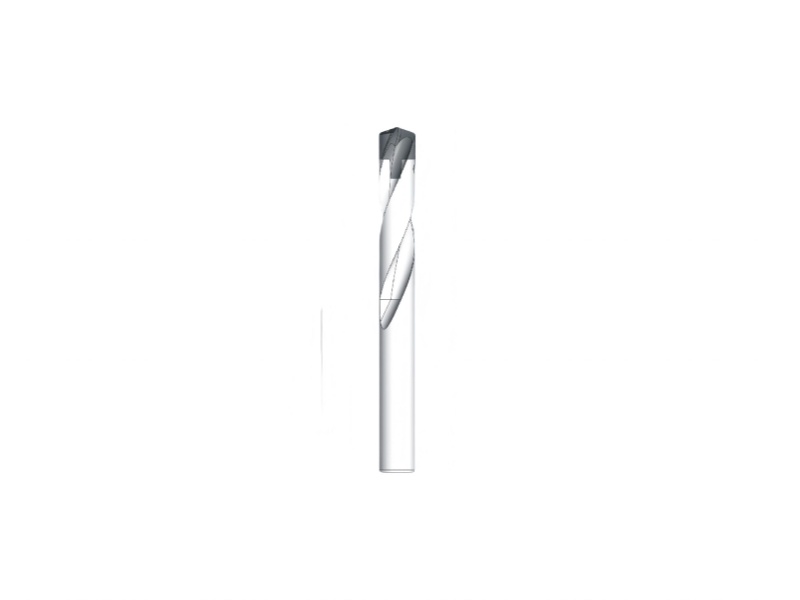
An Indexable Drill Bit is a modular cutting tool designed for producing holes in metal workpieces. It consists of two main parts: a holder body (typically made of alloy steel or high-speed steel) and one or more replaceable carbide cutting inserts. The inserts are mechanically clamped to the front of the holder and perform the actual cutting. When the inserts become worn or damaged, they are simply replaced with new ones, while the holder body continues to be used — often for thousands of hours of production.
This design differs fundamentally from solid carbide drills, where the entire tool body is made of carbide and must be re-ground or discarded when the cutting edges wear out. For small diameter holes (below approximately 12 mm), solid carbide drills remain the standard choice because the material cost is relatively low and the small size makes indexable insert mounting impractical. However, as hole diameter increases, the cost advantage of an Indexable Drill Bit becomes significant — a 50 mm solid carbide drill represents a substantial investment in carbide material, while an indexable drill of the same diameter uses only two small carbide inserts.
The term "indexable" refers to the fact that many inserts can be rotated (indexed) to expose a fresh cutting edge when one edge wears out, before the entire insert needs replacement. This further extends the usable life of each insert and reduces consumable costs. For standardized cutting tool specifications and terminology, the International Organization for Standardization (ISO) publishes internationally recognized standards that provide the technical foundation for indexable tooling systems.
How an Indexable Drill Bit Works
Understanding the cutting mechanism of an Indexable Drill Bit helps in selecting the right tool for specific applications. Unlike a conventional twist drill with two continuous helical cutting edges, an indexable drill typically uses two separate inserts — an inner insert and an outer insert — that work together to create the full hole diameter. The specific geometry and arrangement of these inserts vary by manufacturer, but the fundamental dual-insert principle is common to most indexable drilling systems.
The Dual-Insert Cutting Mechanism
Most indexable drills use a two-insert configuration:
Inner Insert (Center Insert): Positioned near the drill center, this insert cuts the central portion of the hole. Because the cutting speed at the center is very low (approaching zero at the exact center), the inner insert operates under difficult conditions with high thrust forces and poor chip formation.
Outer Insert (Periphery Insert): Positioned at the outer edge, this insert cuts the outer portion of the hole and determines the final hole diameter. The outer insert operates at higher cutting speeds and typically experiences more abrasive wear. It often includes a wiper edge or finishing land to improve hole wall surface quality.
The two inserts overlap in their cutting paths, ensuring that the full hole diameter is covered without leaving an uncut core. The holder body includes helical or straight flutes that provide channels for chip evacuation and coolant delivery.
Coolant and Chip Evacuation
Effective coolant delivery is critical for indexable drill performance. Most modern Indexable Drill Bits feature internal coolant passages that deliver cutting fluid directly through the holder to the cutting zone. This is especially important for deeper holes (L/D > 3D), where external coolant cannot reach the cutting edges effectively. The coolant serves three purposes: cooling the cutting edges to reduce thermal wear, lubricating the chip-tool interface to reduce friction, and flushing chips out of the hole through the flutes to prevent chip packing and re-cutting.
For shallow holes (L/D ≤ 2D), external coolant may be sufficient, but internal coolant is always preferred when available. Some Indexable Drill Bit systems also feature specialized coolant nozzle designs that direct high-pressure coolant jets precisely at the cutting edges for optimal performance in difficult-to-machine materials.
Core Components of an Indexable Drill Bit
A well-designed Indexable Drill Bit consists of several integrated components, each contributing to overall performance, reliability, and ease of use. Understanding these components helps buyers evaluate the quality and capability of different indexable drill offerings.
1. Holder Body
The holder body is the main structural component, typically made from hardened alloy steel. It provides the connection to the machine tool spindle (through various shank types such as cylindrical shank, Morse taper, or flange mount), houses the internal coolant passages, and features the flutes for chip evacuation. The rigidity and dimensional accuracy of the holder directly affect hole quality and tool life. A robust holder design minimizes deflection during cutting, ensuring consistent hole diameter and straightness even at higher L/D ratios. When evaluating an Indexable Drill Bit, the holder design is one of the most important factors affecting long-term performance and reliability.
2. Cutting Inserts
The inserts are the consumable cutting elements, made from sintered tungsten carbide (WC-Co) with various binder contents and grain sizes to achieve different hardness and toughness balances. Inserts are available in a wide range of geometries, including different rake angles, clearance angles, chip-breaker designs, and corner radii. The insert geometry is optimized for specific workpiece materials and cutting conditions. Most inserts for indexable drills have two or four cutting edges, allowing the insert to be indexed (rotated) to expose a fresh edge before replacement is needed.
3. Clamping System
The clamping system secures the inserts to the holder body. Common clamping methods include screw clamping (using a central screw through the insert), lever clamping, and wedge clamping. A well-designed clamping system provides secure, repeatable insert positioning, allows quick insert changes without special tools, and resists insert movement under cutting forces. Some systems use a proprietary holder geometry that provides exceptional clamping security and precise insert positioning, eliminating the risk of insert movement during aggressive machining operations.
4. Flutes and Coolant Passages
The flutes are helical or straight grooves machined into the holder body that provide channels for chip evacuation and coolant flow. The flute design affects chip evacuation efficiency, coolant delivery, and the overall rigidity of the drill. Internal coolant passages run through the center of the holder and exit at the front, directing coolant precisely to the cutting zone. Some high-performance systems feature specialized nozzle geometries that optimize coolant flow for specific applications.
Key Technical Specifications to Evaluate
When comparing Indexable Drill Bits, the following technical specifications directly determine the tool's capability and suitability for specific applications. Buyers should carefully review these parameters against their production requirements before making a selection.
| Specification | What It Means for Buyers | Typical Range |
|---|---|---|
| Hole Diameter Range | Determines the range of hole sizes the drill can produce | 12 mm – 150 mm+ |
| Depth-to-Diameter Ratio (L/D) | Maximum hole depth relative to diameter; higher L/D requires more rigid design | 2D, 3D, 5D, 8D, up to 25D |
| Coolant Type | Internal coolant essential for deep holes; external may suffice for shallow holes | Internal / External / Both |
| Shank Type | Determines compatibility with machine tool spindle | Cylindrical, Morse Taper, Flange |
| Insert Count | Number of cutting inserts (typically 2 for standard drills) | 2 inserts (inner + outer) |
| Insert Edges per Insert | Number of usable cutting edges before insert replacement | 2 or 4 edges |
| Mounting Type | Clamping method for inserts | Mechanical (screw/lever/wedge) |
| Hole Tolerance | Expected diameter tolerance under proper conditions | (0, +0.25) mm typical |
| Surface Roughness | Expected hole wall finish (Ra) | Ra 1.6 – 6.3 μm |
| Holder Material | Material of the reusable holder body | Hardened alloy steel |
Insert Grades and Coatings
Selecting the correct insert grade and coating is one of the most critical decisions when using an Indexable Drill Bit. The insert grade determines the tool's hardness, toughness, wear resistance, and thermal stability, while the coating provides additional wear protection and reduces friction at the cutting interface. The right insert grade can significantly extend tool life and improve hole quality, while an incorrect grade may result in premature wear, chipping, or poor surface finish.
| Workpiece Material | Recommended Insert Grade Type | Common Coatings | Key Considerations |
|---|---|---|---|
| Carbon & Alloy Steel | General-purpose carbide (medium grain, medium Co) | TiN, TiCN, TiAlN | Good balance of wear resistance and toughness; most common application |
| Stainless Steel | Tougher carbide grade (higher Co content) | AlTiN, TiAlN | Work hardening tendency requires sharp edges and good lubrication |
| Cast Iron | Wear-resistant grade (fine grain, lower Co) | TiN, TiCN, diamond-like carbon | Abrasive chips require high abrasion resistance; built-up edge less common |
| Aluminum & Non-Ferrous | Ultra-fine grain carbide with polished rake face | Diamond (PCD) or uncoated polished | Built-up edge is the main challenge; polished surfaces and sharp edges essential |
| Hardened Steel (>45 HRC) | High-hardness grade with high hot hardness | AlTiN, cubic boron nitride (CBN) | High cutting temperatures require excellent thermal stability; reduce feed rate |
| High-Temp Alloys (Inconel, etc.) | High-toughness grade with excellent thermal crack resistance | AlTiN, TiAlN | Low cutting speeds and high coolant pressure recommended; work hardening concern |
It is important to note that insert grade selection should always be guided by the manufacturer's specific recommendations, as different manufacturers use proprietary grade designations and formulations. When switching materials or encountering unexpected tool wear, consult the manufacturer's grade recommendation chart or technical support team for optimized insert selection.
Indexable Drill vs. Solid Carbide Drill: A Comparison
Choosing between an Indexable Drill Bit and a solid carbide drill depends on several factors, including hole diameter, required precision, production volume, and tooling budget. The following comparison summarizes the key differences and helps buyers determine which tool type is best suited for their specific application.
| Factor | Indexable Drill Bit | Solid Carbide Drill |
|---|---|---|
| Typical Diameter Range | 12 mm – 150 mm+ | 0.3 mm – 32 mm (some up to 50 mm) |
| Tooling Cost per Hole | Lower (replace only inserts, not entire tool) | Higher (entire tool must be replaced or reground) |
| Hole Tolerance | (0, +0.25) mm typical | (0, +0.05) to (0, +0.10) mm typical |
| Surface Finish (Ra) | 1.6 – 6.3 μm | 0.4 – 3.2 μm |
| Setup & Change Time | Fast insert change without removing tool | Requires full tool change and re-setup |
| Maximum L/D Ratio | Up to 25D (specialized systems) | Up to 30D (specialized deep-hole carbide) |
| Material Waste | Minimal (only small inserts consumed) | Higher (entire carbide body eventually discarded) |
| Best For | Medium-large holes, high-volume production, rough/semi-finish drilling | Small-medium holes, high-precision requirements, finish-quality holes |
For many production environments, the optimal strategy is to use Indexable Drill Bits for roughing and semi-finishing operations on larger holes, followed by reaming or boring if tighter tolerances are required. This approach combines the cost efficiency of indexable drilling with the precision of secondary finishing operations, delivering both productivity and quality in a cost-effective manner.
Application Scenarios
Indexable Drill Bits are used across a wide range of industries and applications where medium to large diameter holes must be produced efficiently and cost-effectively. The versatility of these tools makes them suitable for both high-volume production lines and flexible job shop environments.
Automotive and Transportation: Engine blocks, transmission housings, brake components, and suspension parts frequently require holes in the 12–50 mm range. Indexable Drill Bits are ideal for high-volume production lines where tool change time and per-hole cost are critical factors.
Heavy Equipment and Construction Machinery: Structural components, hydraulic manifolds, and gearboxes often require large diameter holes (30–100 mm+) in thick steel sections. The cost advantage of Indexable Drill Bits is most pronounced in these larger diameter ranges.
Oil and Gas Equipment: Wellhead components, valve bodies, and pipeline flanges require drilling in high-strength alloy steels and corrosion-resistant alloys. Indexable Drill Bits with appropriate insert grades handle these demanding materials efficiently.
Structural Steel Fabrication: Beam connections, base plates, and structural brackets require holes for bolted connections. Indexable drills with external coolant can be used on radial drills and machining centers for these applications.
Energy and Power Generation: Turbine components, generator housings, and renewable energy equipment (wind turbine hubs, solar panel frames) require precision holes in various materials. Indexable Drill Bits provide reliable performance across these diverse applications.
General Machining and Job Shops: For contract manufacturers producing a variety of parts, Indexable Drill Bits offer flexibility — a single holder can be used with different insert grades to handle steel, stainless, cast iron, and aluminum, reducing the total tool inventory required.
Market Context and Industry Trends
The global cutting tool market continues to grow, driven by increasing manufacturing automation, demand for higher productivity, and the ongoing trend toward cost reduction in metalworking operations. According to industry research, the global indexable inserts market was valued at approximately 35.8 billion yuan in 2025 and is projected to grow at a compound annual growth rate of approximately 5.2% through 2032. In China, the world's largest metalworking market, the cutting tool market reached approximately 487 billion yuan in 2025, with CNC cutting tools accounting for a growing share of total consumption.
Several trends are shaping the indexable drill market. First, there is a growing emphasis on sustainability and waste reduction, which favors indexable tooling over disposable solid tools — replacing only a small insert generates significantly less material waste than discarding an entire solid carbide drill. Second, advances in insert grade and coating technology continue to expand the range of materials that can be efficiently drilled with Indexable Drill Bits, including harder steels and high-temperature alloys. Third, the integration of internal coolant delivery as a standard feature on most indexable drills has improved performance in deeper hole applications. Finally, the trend toward modular tooling systems — where a single holder can accept different insert types for various operations — is increasing the versatility and value proposition of indexable drilling solutions.
Selection Guide: Tips for Choosing the Right Indexable Drill Bit
For buyers researching an Indexable Drill Bit for sale or comparing Indexable Drill Bit prices, the following checklist provides a structured approach to the selection decision. These criteria help ensure that the chosen tool delivers the required performance, quality, and cost-effectiveness for specific machining operations.
Define hole diameter and depth requirements: Start with the specific hole diameter range and maximum depth-to-diameter ratio (L/D) required. Indexable Drill Bits are most economical for diameters of 12 mm and larger. For L/D ratios above 5D, ensure the drill features internal coolant and a rigid holder design. For very deep holes (L/D > 10D), consider specialized deep-hole indexable drilling systems with enhanced rigidity and chip evacuation.
Match insert grade to workpiece material: Identify the primary workpiece materials (steel, stainless steel, cast iron, aluminum, etc.) and select insert grades and coatings accordingly. For shops processing multiple materials, choose a manufacturer that offers a broad range of insert grades compatible with the same holder system, maximizing tooling flexibility.
Evaluate required hole quality: Determine the required hole diameter tolerance and surface finish. Standard indexable drills typically achieve tolerances of (0, +0.25) mm and Ra 3.2 μm. If tighter tolerances or finer finishes are required, plan for secondary operations (reaming, boring, or honing) or consider whether a solid carbide drill would be more appropriate for the specific application.
Check coolant system compatibility: Verify that the machine tool can deliver internal coolant at adequate pressure and flow rate for the selected drill. For indexable drills, coolant pressure of at least 10–20 bar is generally recommended, with higher pressures (40+ bar) beneficial for deep holes and difficult-to-machine materials. If internal coolant is not available, restrict indexable drill use to shallow holes (L/D ≤ 2D).
Assess holder design and clamping security: Evaluate the rigidity of the holder body and the security of the insert clamping system. A robust holder with precise insert positioning ensures consistent hole quality and eliminates the risk of insert movement during cutting. Look for Indexable Drill Bit systems that use mechanical clamping without requiring special tools or adhesives for insert changes.
Consider production volume and cost per hole: For high-volume production, the lower per-hole tooling cost of Indexable Drill Bits often justifies the initial investment. Calculate the total cost per hole, including insert cost, insert life (number of holes per edge), and tool change time. For low-volume or prototype work, the flexibility of indexable drills (one holder, multiple insert grades) may still offer advantages over maintaining a large solid carbide drill inventory.
Evaluate manufacturer support and customization: Consider the manufacturer's technical support capability, availability of spare parts and inserts, lead times for special sizes, and willingness to provide customized solutions for unique applications. A manufacturer with engineering support can help optimize cutting parameters and insert selection for specific materials and machine conditions.
Request a demonstration or trial run: Before committing to a purchase, ask the manufacturer to provide cutting data or conduct a trial drilling test with your specific workpiece material and hole requirements. This verifies that the selected indexable drill can achieve the required hole quality, tool life, and cycle time in your actual production environment.
Calculate total cost of ownership: Compare solutions based on total cost over the expected service life of the holder (which can be many years), including initial holder purchase cost, insert consumption rate, insert cost per edge, tool change downtime, and any required secondary operations. A slightly more expensive holder with better insert life and faster change times may have a lower total cost of ownership.
Looking for a Reliable Indexable Drill Bit Manufacturer?
Alpha Technology specializes in high-performance indexable drilling systems, including the Series C modular drilling solution with L/D ratios from 3D to 25D, internal and external coolant options, and robust mechanical clamping for secure insert positioning. Our systems are designed for hole diameters above 12 mm, delivering up to 50% cost savings compared to conventional solid tooling while reducing material waste through replaceable insert design. With engineering support, a broad range of insert grades, and customization capability for specific applications, Alpha Technology is a partner you can rely on for productive and cost-effective drilling solutions.
Request a Quote TodayConclusion
Selecting the right Indexable Drill Bit is a decision that affects hole quality, production efficiency, and tooling cost in any metalworking operation. By understanding the working principles, core components, insert grade options, and technical specifications of indexable drills, buyers can make informed decisions that match the tool to their specific application requirements. The key factors to evaluate are hole diameter and depth, workpiece material, required hole quality, coolant availability, production volume, and manufacturer support capability.
For medium to large diameter holes (12 mm and above) in high-volume production, an Indexable Drill Bit offers compelling advantages in cost per hole, setup efficiency, and material waste reduction compared to solid carbide alternatives. The modular design — with a reusable holder and replaceable carbide inserts — aligns well with modern manufacturing trends toward sustainability and cost optimization. By approaching the selection process systematically and requesting trial demonstrations when possible, manufacturers can select an indexable drill solution that delivers consistent quality, reliable performance, and strong return on investment for years of productive service.
FAQ
What is an indexable drill bit?
An indexable drill bit is a modular cutting tool that combines a reusable steel or alloy holder with replaceable carbide cutting inserts. When the insert becomes worn, only the small insert needs to be replaced, while the holder body continues to be used indefinitely. This design reduces tooling costs and material waste, particularly for larger diameter drilling operations.
What diameter range do indexable drill bits cover?
Indexable drill bits are typically available in diameters starting from approximately 12 mm and extending up to 150 mm or more. They are most commonly used for holes larger than 12 mm, where solid carbide drills become expensive and indexable solutions offer significant cost advantages.
What depth-to-diameter ratios can indexable drills handle?
Standard indexable drills are available in depth-to-diameter (L/D) ratios of 2D, 3D, 5D, and 8D. Specialized deep-hole indexable drilling systems can reach L/D ratios up to 25D. Higher L/D ratios require more rigid holders, internal coolant delivery, and careful attention to chip evacuation.
How do I choose the right insert grade for my material?
Insert grade selection depends on the workpiece material. General-purpose carbide grades with TiN or TiCN coatings work well for carbon and alloy steels. For stainless steel, choose grades with higher toughness and AlTiN coatings. For cast iron, use grades with good abrasion resistance. Always consult the manufacturer's grade recommendation chart for your specific material and cutting conditions.
What are the main advantages of indexable drills over solid carbide drills?
Indexable drills offer lower tooling cost per hole (especially for diameters above 12 mm), faster insert changes without removing the tool from the machine, reduced material waste, and availability in very large diameters. Solid carbide drills offer better hole precision, higher surface finish, and can drill smaller diameters, but are more expensive to replace when worn.
Do I need internal coolant for indexable drilling?
Internal coolant is strongly recommended for all indexable drilling applications and is essential for holes with L/D ratios greater than 3D. Internal coolant delivers cutting fluid directly to the cutting zone, improving cooling, lubrication, and chip evacuation. For very shallow holes (L/D ≤ 2D), external coolant may be sufficient but will generally result in shorter tool life and poorer chip control.
What hole quality can I expect from an indexable drill?
Under proper cutting conditions with appropriate insert grades and parameters, standard indexable drills typically achieve hole diameter tolerances of approximately (0, +0.25) mm and surface roughness of Ra 1.6 to 6.3 μm. If tighter tolerances or finer finishes are required, secondary operations such as reaming or boring should be planned after the indexable drilling operation.


